Harvard grad students end strike
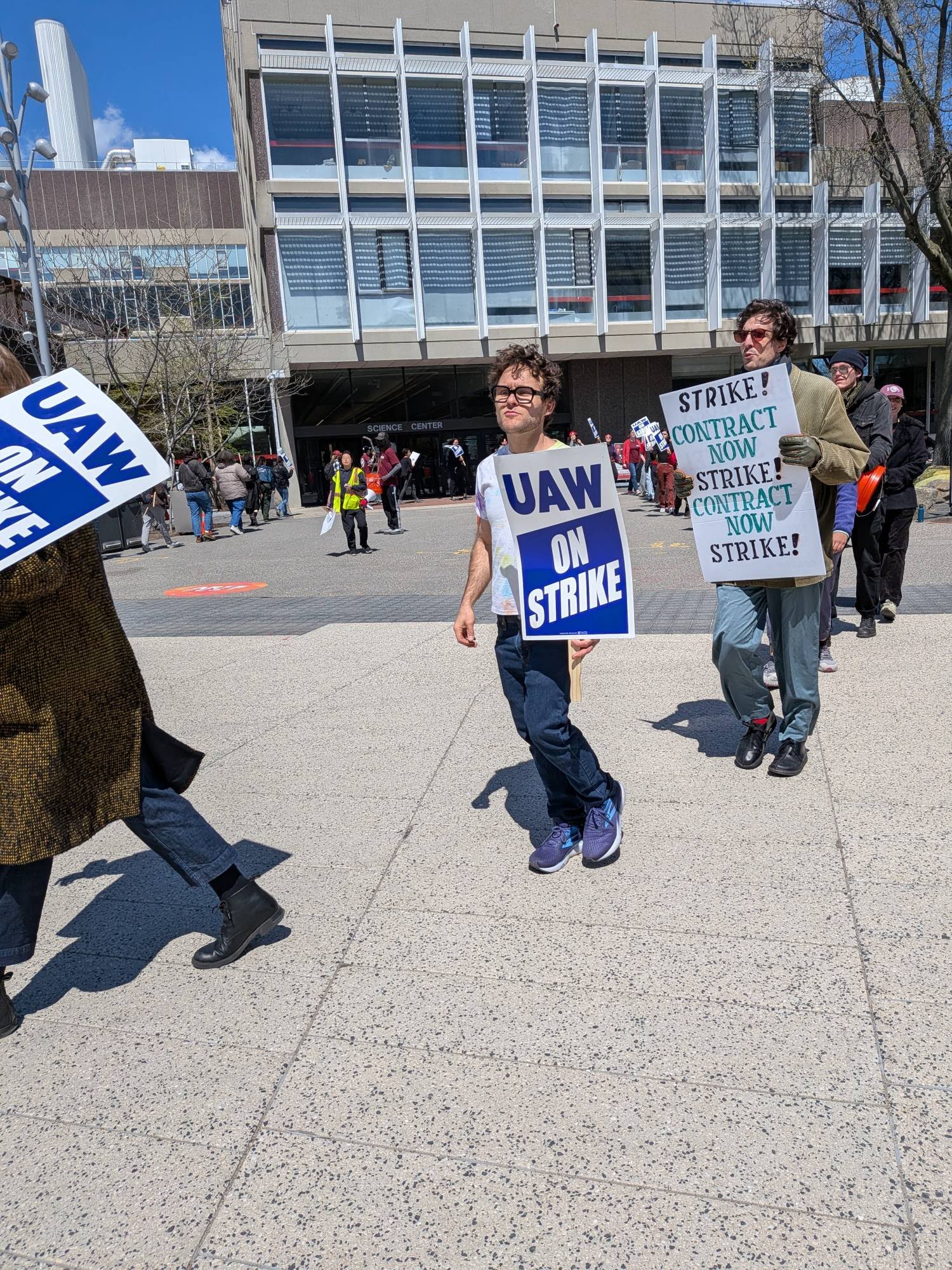
After 40 days of demonstrations, graduate student workers at Harvard University don’t have a contract but felt negotiations had shifted palpably, allowing them to end their strike.
Read more Cambridge police have to remove ShotSpotter. Officers aren’t happy
Harvard Graduate Students Union – United Auto Workers Local 5118, the union representing over 4,000 graduate student workers at Harvard, announced the end of its strike on Monday. The decision to stop striking came after hundreds of student workers picketed Harvard’s school-wide commencement ceremony on Thursday and after Boston Mayor Michelle Wu chose not to speak at Harvard Law School’s ceremony on Wednesday to avoid crossing the union’s picket line.
“The best-case scenario would’ve been that we have a contract that would serve the needs of our members at this point and clearly, we’re not there,” said Denish Jaswal, union president. “But at the same time, I’m feeling like there’s room for us to get there in the near future.”
Over 80 percent of the union’s voting members voted to end the strike in a membership meeting on Friday, according to Jaswal. The membership meeting immediately followed a bargaining session with administrators, who Jaswal said were “much more willing” to discuss the union’s key issues.
“There was just a tonal shift and practical shift in how the university is handling negotiations, and I think that this is only possible [as] a result of the continued disruption,” Jaswal said.
The strike was union’s longest since its inception in 2018. The strike began on April 21, after 15 months of negotiations between union members and administrators failed to yield a new contract. The union wants third-party investigations for harassment and discrimination claims, protections for non-citizen and disabled workers that align with federal law, wages on par with Harvard’s peer institutions — including MIT and Brown University — and equitable pay between research assistants and teaching fellows.
The union said in a statement that disruptions caused by the strike — such as ungraded assignments and pauses on laboratory research — pushed administrators to engage with union members on some key demands. The union said administrators proposed several concessions, including a one-percent increase of their four-year raise offer and full dental coverage for PhD students. Jaswal said it also expanded access to funds for healthcare, childcare, emergencies and non-citizen worker expenses to all graduate students.
“While these proposals fall far short of the union’s demands for a living wage and do not address workplace protections like grievability of harassment and discrimination or non-citizen protections, they were the first indication of engagement from the university on the union’s priorities,” the statement read.
In a note to Harvard faculty on Monday, Jessica Soban, deputy provost, and Paul Curran, managing director of labor and employee relations, confirmed the end of the strike. They said student workers with ongoing work appointments returned to work on Monday and that Harvard “remains committed to the ongoing negotiations with the student worker union and to bargaining in good faith.”
Jaswal said that the union will meet this week and plans to continue meeting weekly to determine how members will organize to push for a fair contract. The strike, she said, has activated many union members and demonstrated that they are capable of “disrupting education in a very serious way.”
“Our members are a very powerful force,” Jaswal said. “We’ve been out here because we wanted to fight for these gains for our working conditions.” She said the union will continue to push for a stronger contract.
