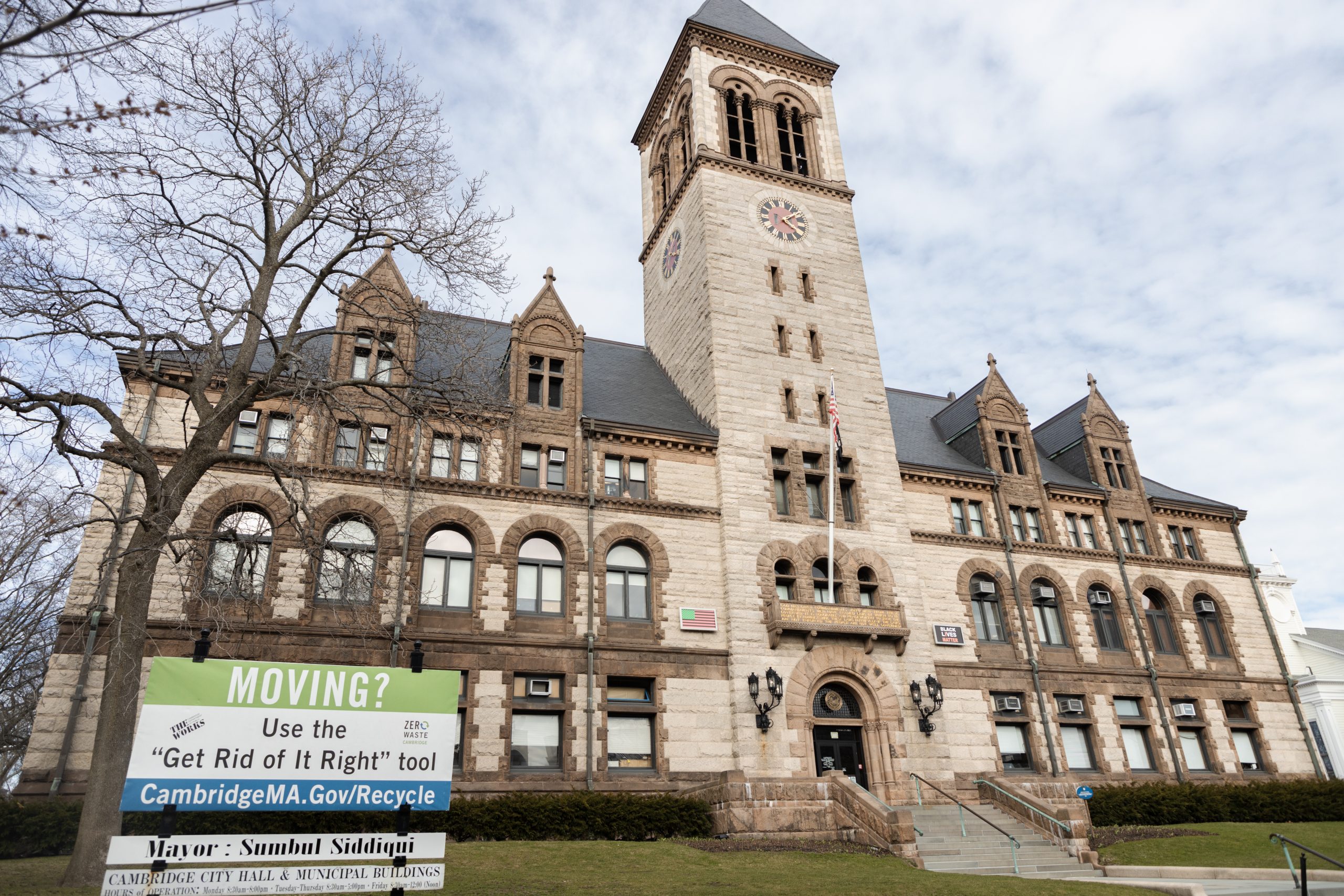
Cambridge sidesteps financial headwinds, but tax hikes possible
Property taxes will need to increase by to cover the cost of Cambridge’s first billion-dollar-plus budget, passed during Monday’s City Council meeting. The amount represents a four percent increase in city operating expenses. Fiscal headwinds are blowing across the region, driven by uncertain economic conditions and a notable downturn in the biotech industry. The value of commercial properties has decreased, lowering what cities can collect in tax revenues In September of last year, the Massachusetts Municipal Association warned cities and towns of “” financially.
Read more Regional politics will make climate change impact worse for Cambridge, Boston
Cambridge has weathered these conditions better than some — it won’t be cutting services in FY 2027. It will spend less on capital improvements than in previous years. But other Bay State municipalities have had to make tough choices on spending cuts in the face of inflation-driven cost increases and greatly diminished federal funding. Some communities have put before voters, Proposition 2 ½ overrides, which allow cities and towns to raise property taxes more than the state-mandated maximum increase of two and a half percent.
“When you look at the financial picture that’s out there, and you look at what other communities are going through… and you look at our budget, it is really remarkable,” said Councillor Marc McGovern. He noted pressures to cut spending have hit economically advantaged and disadvantaged communities alike.
In an April interview, though, City Manager Yi-An Huang hinted that Cambridge is getting close to hitting its levy limit for the commercial property tax rate, which may necessitate higher increases on the residential side of the equation. For this year, though, he plans to recommend a residential property tax rate that’s relatively level with recent years – a matter the council will not take up until September.
The total amount budgeted for the city’s general fund comes to about $1.018 billion. That, plus, $15 million in annual funding for Cambridge’s water department, which is budgeted separately, brings the total annual operating budget of city to about $1.033 billion.
Councillor Patty Nolan, co-chair of the council’s finance committee, called this year’s budget “phenomenal.”
“It’s a real testament to our council priorities, our city’s values, and the fact that we made it through here without needing to cut things,” she said. The city also approved a public investment budget of about $45 million. (The city budgets “capital assets” that last over five years – like infrastructure projects – separately.) This amount, in combination with about $110 million in bond authorizations for specific projects, brings the total amount the city will spend on capital improvements for things like sewers, roads, and building renovations to about $155 million.
The budget breakdown
Minor amendments were made to the budget presented to city council for consideration back in April. They include additional funding for the city’s housing department that will go toward work on plans to develop social housing, as well as increased services for immigrant families in Cambridge through the Department of Equity and Inclusion.
Some of the largest line items continued to be for cornerstone services: public works, police and the fire department. The increase in the budget compared to FY 2026 was driven in part by increased funding for schools and a cost-of-living adjustment for the salaries of Cambridge municipal staff. About 15 percent of the budget will go toward paying benefits for current and former city employees, and about 11 percent (about $114 million) to paying off debt.
Read more CRLS Sports: Juanes Seto finishes second in state in one-mile run
Cambridge’s current total debt currently stands at $707 million, not including bond authorizations just approved by council. The city’s net debt (which doesn’t include debt that is paid for by water and sewer rates) currently stands at about $594 million – roughly $4,900 per Cambridge resident. For comparison, at the end of fiscal year 2025, Boston has of about $2.4 billion, amounting to roughly $3,400 per resident, although Boston’s debt represents a higher proportion of its overall property tax base (one percent) than Cambridge’s (0.7 percent).
The budget was not approved unanimously, as Councillor Ayah Al-Zubi voted “present” for the general fund. Al-Zubi serves as Nolan’s co-chair on the finance committee.
“I view a budget as a moral document,” she said. “I just don’t think it’s doing enough for low- and middle-income people,” she added, referencing frustration among Cambridge Public Schools (CPS) staff for lower-than-expected funding for roles like paraprofessionals and substitute teachers.
McGovern disagreed.
“Because we have been so financially strong for so long, and we do so many things, there’s always this tendency to say ‘more, more.’ I think this budget does take care of working people,” he said.
He also clarified that budgeting decisions made within CPS are decided by the Cambridge School Committee, while city council only has the authority to approve the overarching amount.
Multiple councillors commended city staff for their preparation ahead of this year’s budget.
“I really think that this year the process has been a lot better than in past years,” said Vice Mayor Burhan Azeem ahead of the vote to adopt the budget. “I think that there’s been explicit public input, a lot more bringing us along, a lot more details about the whole process.”
Read more Shoplifting arrests skyrocket in Cambridge, data shows
