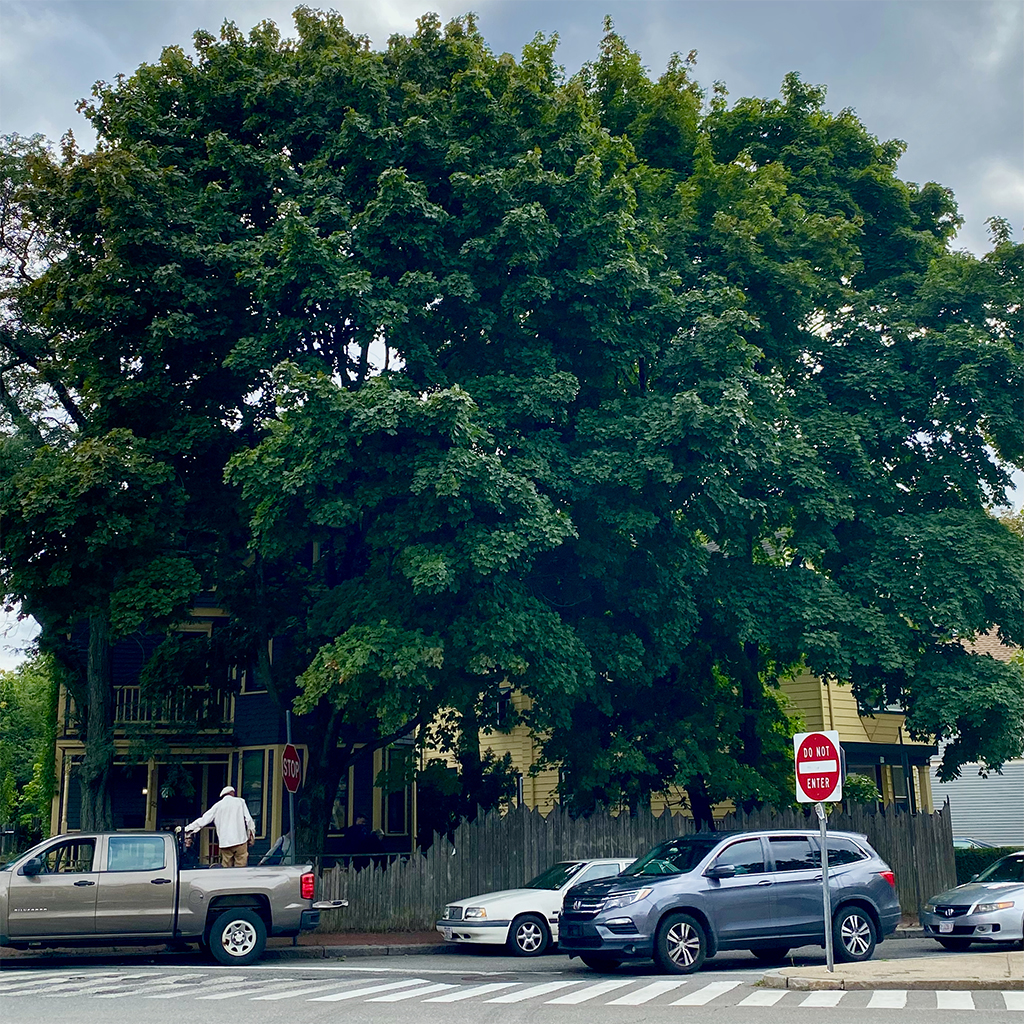
The Lorax comes to Cambridge City Council
Trees were at the root of City Council’s latest zoning debate, which at one point even saw “The Lorax” invoked.
Read more Let them play: Ahern is strategic for our children and public health
The Council voted unanimously to consider updates to its Tree Protection Ordinance, a set of city laws that govern how and when trees can be removed from private properties.
The current ordinance requires developers to get a permit to remove a “significant” tree over a certain size. But it makes no mention of the expansive underground roots systems unbound by the human concept of property lines. If these systems are disrupted by excavation, trees could be killed or topple.
During public comment, Lexington Street resident Peter Sturges said the basement being dug for a multifamily housing project next to his house could affect several significant trees on his property, according to an arborist he consulted. “This excavation will clearly endanger these trees, likely killing them or causing them to fall, possibly injuring people or damaging neighboring property … trees of this size are irreplicable, at least during my and my children’s lifetime,” Sturges said.
Sturges said he has been “very supportive” of multifamily housing in Cambridge, and “with the right protections in place, housing development and urban canopy preservation need not be in conflict.”
Several changes were made to Cambridge’s zoning last year to encourage density and multifamily housing. Now, developers are allowed to build up to five feet from the sides and ten feet from the front of their lot lines in most residential areas of the city.
The policy order initiating the process to update the Tree Protection Ordinance doesn’t include specific language for an amendment, but it did provide a roadmap for what new regulations could look like. New rules could include requiring developers to receive their tree removal permits before building plans are approved and assuring excavations don’t impact abutter’s trees.
Some commenters saw updating regulations as a backdoor way of slowing or blocking new multifamily housing.
“This policy order seems harmless at first. Who doesn’t love trees? But like so many things, there’s a hidden tradeoff here,” said resident Max Kaplan during public comment. “This policy order is nothing but an extra pathway for wealthy residents to block needed multifamily housing.”
The order’s sponsor and co-sponsors, however, ran the gamut of perspectives on housing and development. Its main sponsor was Councillor Cathie Zusy, the lone councillor last term to vote against last year’s slate of major residential zoning changes. Its co-sponsors were Councillors Patty Nolan, who played a key role in negotiations that resulted in the same changes, Ayah Al-Zubi, who has established herself as a champion of denser development, and Councillor Timothy Flaherty, who is also new to council this term and has been vocal about his opposition to last year’s ordinance changes.
Zusy, introducing the policy order, espoused the environmental and public health benefits of trees.
“Trees cool us, they absorb water and prevent flooding … they absorb carbon,” Zusy said. “They do so many things that are extraordinary, so we just want to make sure we have a thoughtful conversation to ensure that we continue to have a healthy tree canopy.”
Councillor Marc McGovern expressed concerns about special permits for housing development, saying “we know the road that that sometimes goes down.” He introduced an amendment directing the Community Development Department to only put forward recommendations for new ordinance language “that do not negatively impact housing development.”
Read more A recipe for connection in Cambridge
Instead, he suggested the city could meet its tree protection goals by allowing flexibility for where projects have their ten-foot setback, which currently is required at the street-facing side of buildings, regardless of if there are trees there.
Zusy was the only councillor to vote against the amendment.
Before the vote, Flaherty offered some Seussian words of wisdom: “Like the Once-ler learned after chopping down all the Truffula Trees in “The Lorax,” when they’re gone, they’re gone.”
Shotspotter redux
The Council directed Cambridge Police Department (CPD) to terminate its use of ShotSpotter law enforcement surveillance technology on May 18. But Al-Zubi, who chairs the public safety committee, said the language in policy order didn’t correctly invoke the council’s authority granted by the city’s Surveillance Technology Ordinance to direct the city manager and CPD to make the change.
The “ordered” section of the policy order simply read: “That the City Council disapprove further use of SoundThinking’s Acoustic Gunshot Detection Technology (ShotSpotter) by the City pursuant to the Surveillance Technology Ordinance 2.128.060 (C).”
Al-Zubi said this language had resulted from a conversation with City Solicitor Megan Bayer.
Ahead of the meeting, Councillor Flaherty, one of the two “no” votes on ShotSpotter planned on introducing an amendment in the form of a substitution that would have delayed any action council could take to ban the technology. Flaherty’s amendment implied the process conducted by the public safety committee was incorrect and that a special meeting of the council is required to examine the city’s Annual Surveillance Report before it can revoke approval for use of surveillance technology by city departments can be revoked. (The ordinance makes no explicit mention of a committee of the whole.)
In a moment of savvy political maneuvering, however, while Al-Zubi introduced the new policy order she also moved to “call the question,” bringing the agenda item to a vote before Flaherty could introduce his amendment. The motion passed 6-3, with Flaherty, Councillor E. Denise Simmons and Zusy voting no.
Flaherty asked for his amendment to be considered but was told he couldn’t make a motion until after the vote was complete. All councillors voted the same as two weeks ago on the policy order itself, once again passing 5-2 with two councillors voting present. Before Flaherty could speak again, Al-Zubi quickly made a motion to reconsider the policy order. Councillors who vote in favor of a narrowly decided policy order sometimes do this with the intent of voting no, in order to prevent other councillors on the prevailing side to bring the issue back up for debate if they change their mind in the future.
Flaherty was visibly frustrated.
“There’s an unlawful policy order before the board, which doesn’t follow the strict language of the ordinance,” Flaherty said.
Mayor Sumbul Siddiqui interjected to say the policy order had come from the legal department and that “the meetings that were supposed to happen [according to the Surveillance Technology Ordinance] did happen. Factually.”
The motion to reconsider failed 3-6, locking in council’s vote. Flaherty was once again joined by Simmons and Zusy in his attempt to keep debate open.
When asked over email if he intended to introduce his planned amendment as a policy order in a future meeting, Flaherty replied: “I think I plan to reintroduce something. To be determined.”
Read more Pesky rabbits and jumping spiders
