MIT’s Fab Lab marks 25 years of making almost anything
The Fab Lab, MIT’s digital fabrication laboratory, is turning 25 this week, and its founder said he did “not remotely” expect the extent of the lab’s impact. “What I didn’t see is it fundamentally changes how society and economy works,” said Neil Gershenfeld, an MIT professor and director of the Center of Bits and Atoms. “It’s not utopian. It’s not free. But instead of consumption, if you can produce what you consume, it changes everything.”
Read more For Cambridge Historical Commission, zoning ordinance has ‘changed the calculus’
The lab’s annual conference happens this week throughout Cambridge. It is the third time the conference has been held in Cambridge since 2005, when it first began.
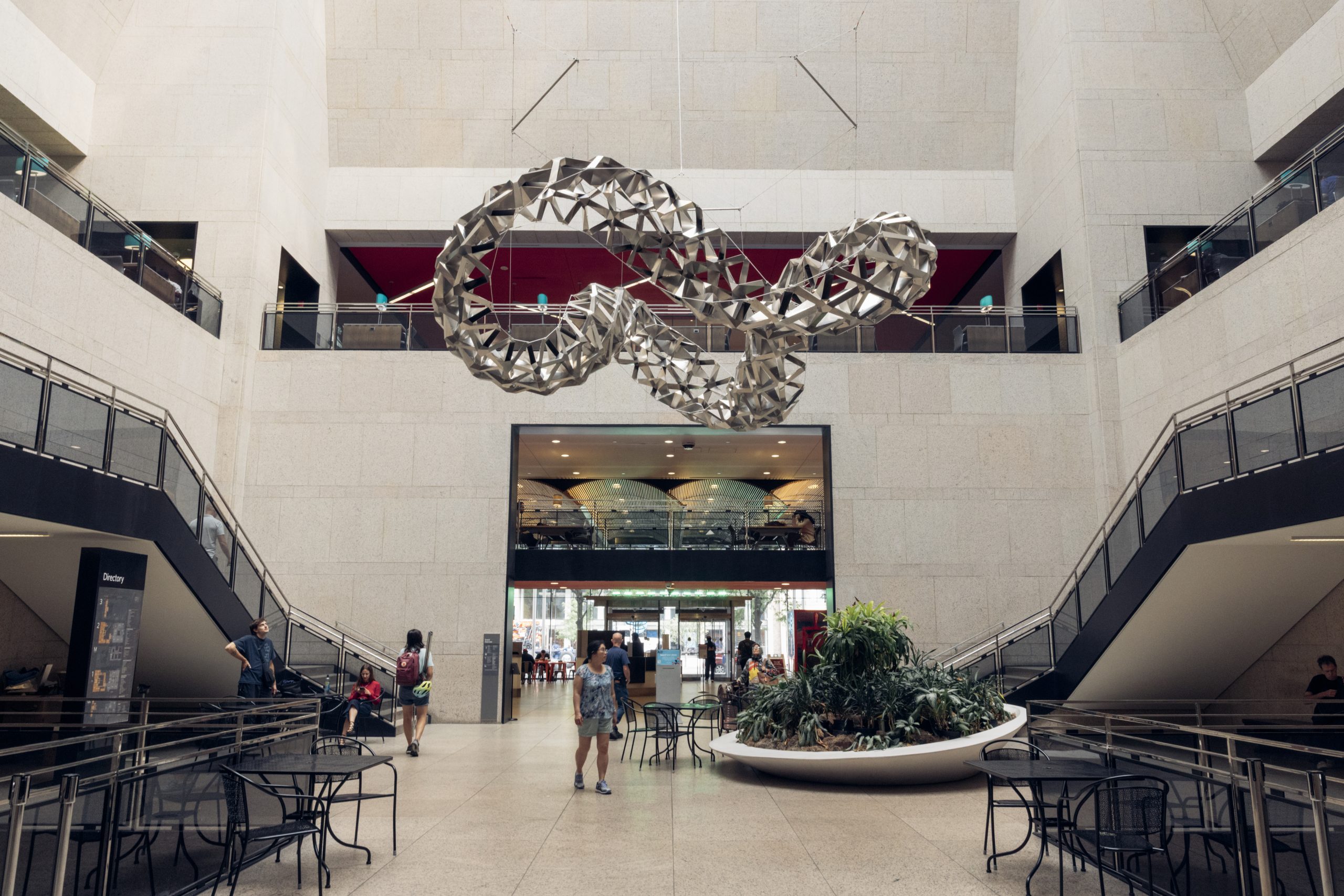
A fab lab is a small-scale workshop where people use tools, including 3D printers and laser cutters, to create and invent physical products. FAB26 will show off innovations from Fab Labs around the globe. “We’re going to show things like rapid prototyping, making vehicles,” Gershenfeld said. “One of my students is doing a giant sculptural installation in the Boston Public Library. And there’s examples of using the tools in the lab to make aquaponic and hydroponic systems for food, to make antennas and radios for data networks, to make shelter. You really can make almost anything today.”
The Fab Lab spun out of MIT’s Center for Bits and Atoms and Gershenfeld’s still-popular course “How to Make (Almost) Anything.” In 2003, Gershenfeld set up the first fab lab, the South End Technology Center, with the help of the late Mel King, a community activist and MIT adjunct professor. From there, it “went viral,” Gershenfeld said.
“There was a Ghanaian community in Boston that wanted to bring one to Ghana, and that led to bringing one to South Africa, and then one to the Arctic at the top of Norway,” Gershenfeld said. There are now community labs in 160 countries, he said, serving as “creative hubs” for their regions.
The global interest in them led to the Fab Foundation, a nonprofit spun out of the Center for Bits and Atoms in 2009, and the Fab Academy, a network of courses that teach digital design, rapid prototyping, and 3D fabrication.
That global network will be well-represented in this year’s week-long event, with speakers from Fab Labs and makerspaces around the world running workshops and holding talks such as “How to Build a Nuclear Submarine” and “The Future of Life.” The expert talks and keynote addresses will be streamed and available to watch online.
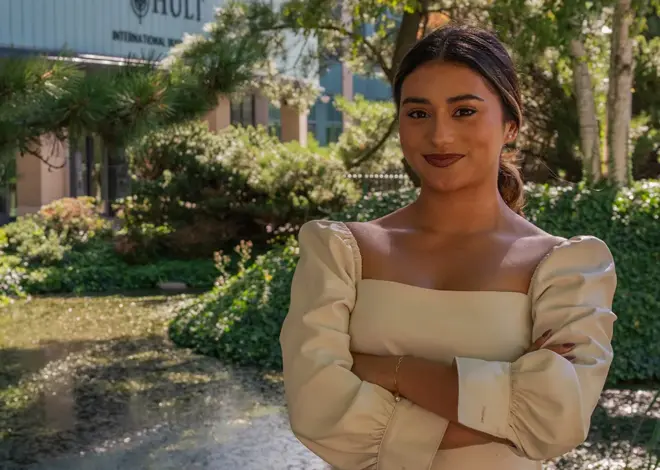
Alfonso Parra Rubio, a doctoral candidate at the Center for Bits and Atoms, gave a lecture Monday called “Engineering Art” at the conference.
Read more Everybody Gotta Eat, so Manny Mervil gotta work
Parra Rubio, who is from Spain, said being able to learn how to use the fab labs is empowering. “You want to develop labs in places, but you also want to develop users. You want to develop people. At the end of the day, the goal is to empower people through machines, not to provide machines.”
Ultimately, Gershenfeld said he has begun to work on “urban self-sufficiency,” where cities can independently produce everything they need.
A new hub
At the end of the conference, Gershenfeld and his team will unveil the new Fab Hub at 325 Main Street in Kendall Square. The goal, he said, is for the space to be a local and regional resource. In Kendall Square, he said, “ordinary people can’t go in and do anything, and so this is creating state-of-the-art advanced manufacturing available to the community on a local scale.”
The space looks “unreal,” according to Parra Rubio. “I can’t wait to see people getting access, making work, and developing their own projects in this area,” he added. “I think that it’s a nice pushback to the massive gentrification of biotech [in Kendall Square]. Every building feels very private, so I hope that this is a place of easy access to any member of the community.”
The Fab Hub will connect Cambridge to the global network of fab labs and also support the creation of other makerspaces throughout the greater Boston area.
In the next 25 years, the question will shift from how to make anything to “how do you live, learn, work, and play if anybody can make anything.”
Read more Cambridge Magna Carta moment may open new UK connection