A tale of two liquor laws
Is Cambridge getting more lax about liquor? Two policies are telling two different stories.
Read more Mass. high court strikes rent control question from ballot
New public drinking permissions during the World Cup suggest a more laissez-faire approach. But the same Cambridge department that fast-tracked the state’s idea to extend bar hours and offer alcohol to-go through July also wants to limit customers to one drink every 30 minutes.
City makes pour decisions
On May 1, Cambridge’s board of license commissioners proposed changes to the city’s alcohol regulations. They included a 30-minute cooling period between drink orders, an earlier last call and a requirement to offer drug testing devices for tampered drinks.
These changes were emailed to alcohol license holders in a redlined 30-page document, but only gained widespread notice in mid-June after Lauren Friel, owner of the wine bar Dear Annie, posted about them on Instagram.
“[These rules] would probably be the most restrictive in the country,” she said in a widely-shared video. “The only way a colleague of mine suggested we [monitor customers] would be to put egg timers on every table.”
The proposed rules were puzzling to many business owners and patrons, who are still adjusting to the fact that you can now stroll down in Cambridge with a beer in hand. That is, as long as that beer is from an approved bar, in an approved cup, and held by a wristbanded hand.
None of this was possible until June 12. Four days after Massachusetts Governor Maura Healey signed an anticipated law loosening alcohol service during the World Cup, Cambridge’s Licensing Commission hastened to offer local businesses permits to take advantage of the opportunity.
City spokesperson Jeremy Warnick said sending the proposal of stricter rules right before the city launched its summer public drinking zones was “a coincidence.”
But the effect, according to Evan Harrison, co-owner of State Park in Kendall Square, was more like “whiplash.”
The loosening of rules for people to enjoy the city in new ways during the World Cup was “pretty progressive and cool,” he said. But these new, proposed rules are “categorically opposed” to that.
Any rules requiring service staff to keep time would require operators to “micromanage people in a condescending way,” he said. “It distracts from any kind of authentic experience in a bar or restaurant.”
Prohibition still unpopular
Last Thursday, a summer thunderstorm didn’t keep residents from enjoying the World Cup match between Mexico and Korea.
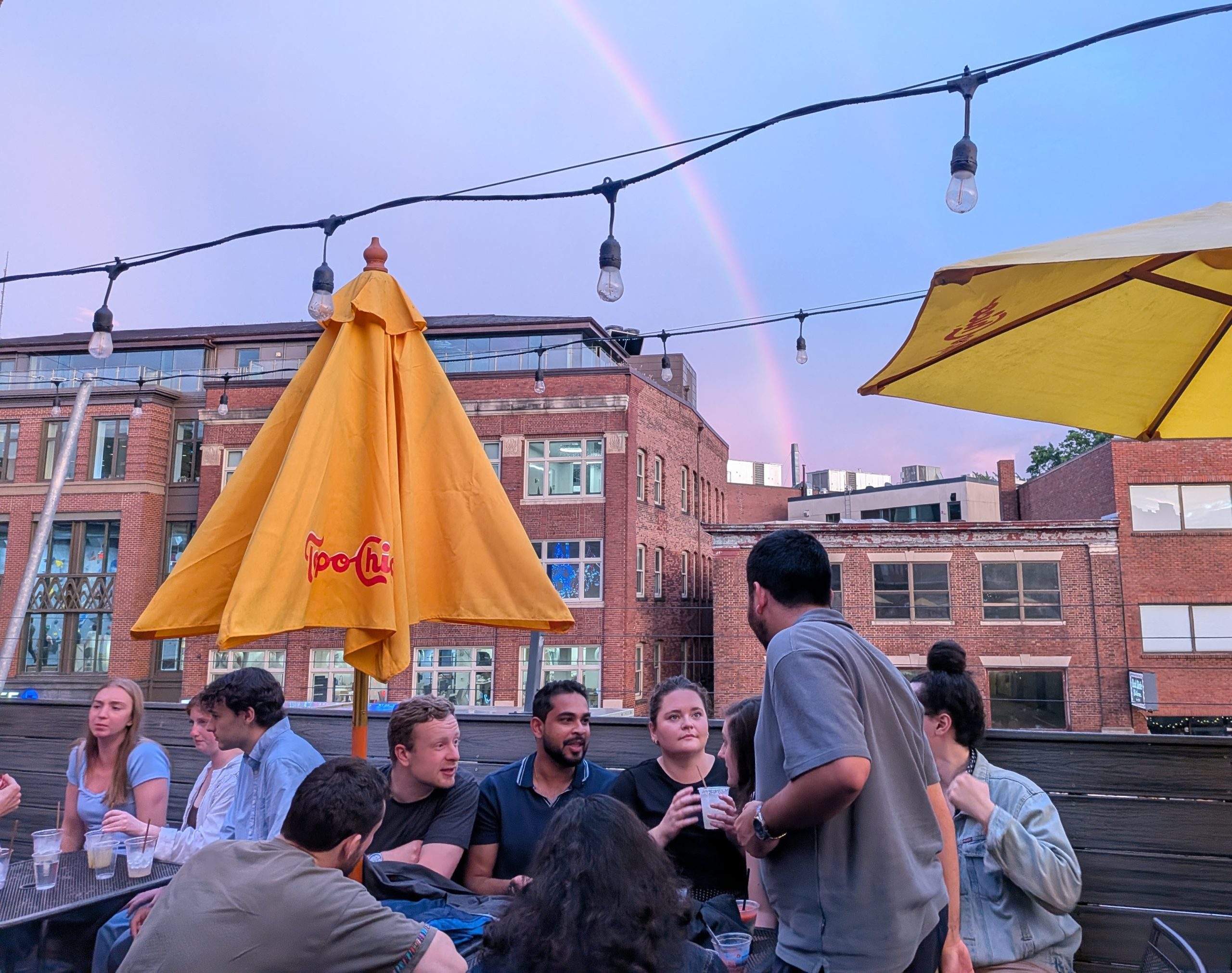
On crowded rooftops, in lines outside bars, and on sidewalk patios, both residents and nightlife staff were eager to weigh in on the new rules.
Roofside at Felipe’s in Harvard Square was A.J. Martinez, a nine-year resident of Cambridge, who called the 30-minute wait time “dumb.”
Another patron who comes to Cambridge with friends from Boston said it would deter him from crossing the Charles River to socialize.
Security professionals at both Felipe’s and Shays said it didn’t seem feasible.
It’s “overkill,” said Divyne Apollon, a security guard, who said servers are already trained to monitor people for overconsumption.
Apollon has worked in nightlife for over 40 years in places like Washington, D.C. and New Jersey and said regulations in Cambridge and Massachusetts are “way over the top,” even for a region that attracts many young people for college.
Here, “there’s no responsibility [expected] from the patron,” he said.
The city’s hangover
Two days after Friel posted her video, the licensing board tried to walk back its proposal.
License commission chair Nicole Murati-Ferrer sent to business owners saying that the document that was originally sent was a working draft. Sending it out was a request for feedback, she wrote, before apologizing if that wasn’t clear. She said the board held two feedback sessions for business owners in June and would host two more in July before discussing the rules in August.
Read more Moulton pledges investments in biotech, affordable housing
“I never got a notification of any listening sessions,” said Kari Kuelzer, owner of The Sea Hag and Grendel’s Den in Harvard Square. Kuelzer said some of her colleagues in the industry had heard of these sessions, but she didn’t know anyone who was actually invited.
“People started freaking out that they weren’t getting invited,” she said. “I don’t know how to explain this. It’s all hair-on-fire right now.”
On the city side, Warnick said he didn’t know how the licensing commission organized those feedback sessions, or if they were well-attended. But, he insisted that there was “no rush to this process” and the licensing board was not trying to finalize the rules soon.
The licensing board is under the purview of the city manager. The three commissioners include a commission chair, the fire chief and the police commissioner, and are not publicly elected. Although they do not edit their rules on a set schedule, changes have been published roughly every 10 years since the late ’90s.
At Monday night’s city council meeting, councillors expressed concerns about the way the proposed rules were communicated.
“I think this is nuts,” said councillor Marc McGovern. “… If [the board] really wanted to start a conversation, there was a better way to do that than redlining the current rules with things they say they’re not advocating for.”
He co-sponsored a policy order led by councillor Patricia Nolan calling for more “inclusive and robust” community engagement on any proposed licensing changes.
“Even if we don’t have the direct authority to change things, we have the responsibility to make sure that changes are done in a way that is … transparent … and respectful of all stakeholders,” said Nolan in an interview.
During discussion, councillors turned their attention to the licensing board itself, which they do not oversee.
Mayor Sumbul Siddiqui asked if the board might be expanded. She advocated for the inclusion of the city’s Community Development Department which, amongst other things, offers services to small businesses.
The number of licensing board seats is determined by the state and currently fixed at three. But by the end of council discussion, the policy order gained a co-sponsor and was edited to include even stronger language disapproving of the new rules. It was ultimately referred to the Economic Development Committee for a hearing where, crucially, business owners would be able to share their feelings with the License Commission.
City orders another round
Since the new rules were proposed, Cambridge has been the subject of online ridicule, with social media commentators describing the city as run by “theater dorks” and puritans who lie awake at night “worrying if someone, somewhere might be enjoying themselves.”
In real life, the reviews were mixed.
Kuelzer, who owns The Sea Hag and Grendel’s, agreed that “we have a reputation of being a bit of a nanny state with a finger-wagging culture.”
Jeff Clements, who lives near Harvard Square, said he thought Cambridge has a good government which is, by and large, “responsive to the needs of the people who live here.”
“I don’t think of Cambridge as being a cliche of heavy-handed regulation,” he said.
Despite his disapproval of the board’s proposed rules, Harrison, co-owner of State Park, has also had positive experiences with the city. “We have a good relationship with the alcohol board. We’ve asked them for help and oversight, and tips with issues we’ve had before.”
“The city is pretty cool,” he conceded. “Most people get it. It’s a minority that want these changes in place.”
Speaking for the city, Warnick said that the licensing commission would host two more feedback sessions in July before a yet-to-be-scheduled meeting in August.
Read more Tasty Meatless Morsels at Lulu Green
