Cambridge, Somerville documentary makers make their marquee
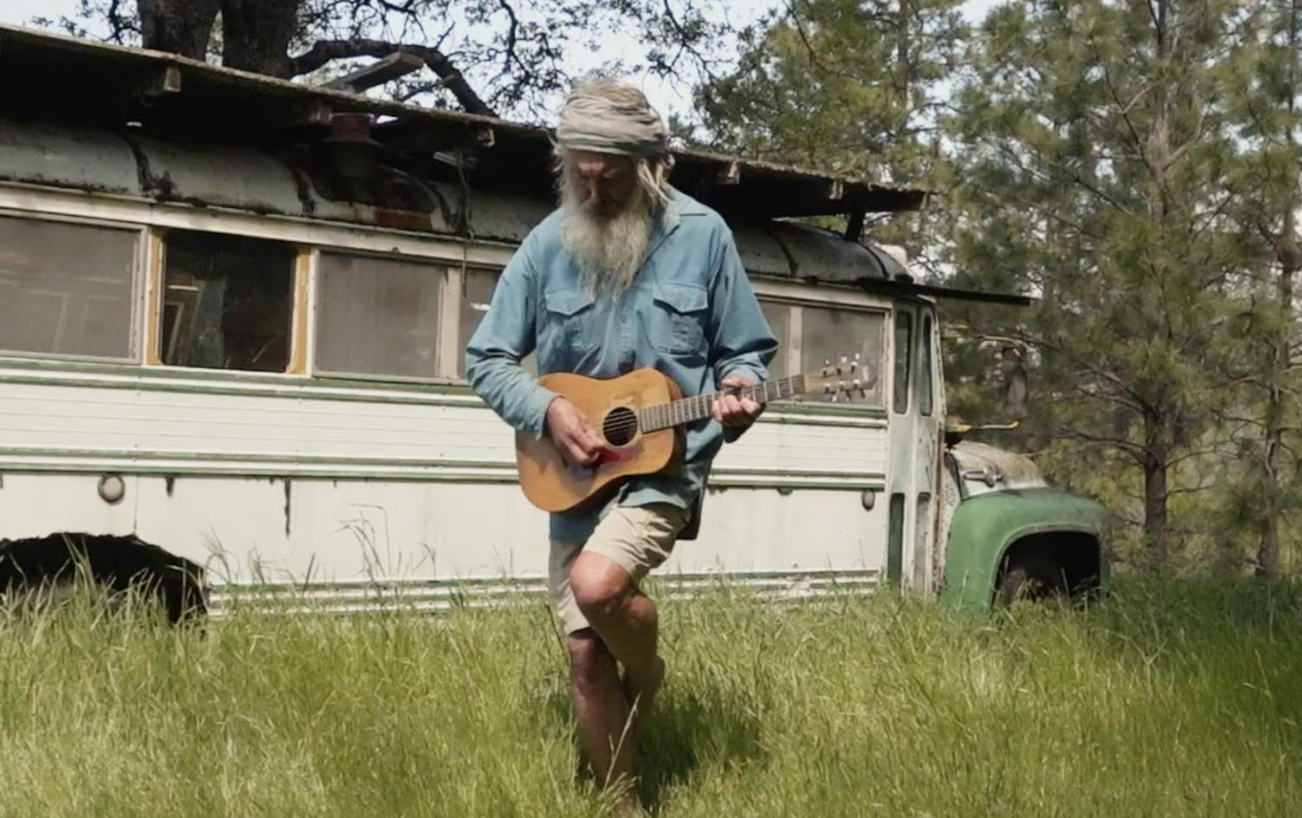
Next Wednesday sees screenings from a pair of local documentary filmmakers, one in our backyard, the other a quick car (or bike, or 66 bus) ride away. At the Somerville Museum, filmmaker Anne Continelli debuts her new documentary short “A Matter of Light” (2026), about the artist collective at Somerville’s legendary Vernon Street Studios and the challenges local artists face today. Meanwhile, down at the Woods Hole Film Festival, Cambridge native Robb Moss presents his new documentary feature “The Bend in the River” (2025), following a group of friends from their days as hippies rafting through the Grand Canyon in the 1970s to navigating the realities of time and aging. And if you can’t make it to Woods Hole, Moss will appear closer to home on Thursday, moderating a Q&A with fellow Cantabrigian documentarian Ross McElwee across the river at the Coolidge Corner Theatre for a screening of the latter’s new film, “Remake” (2026). Cambridge and Somerville remain a vital home for the arts, and it’s always fascinating to see local filmmakers make good.
Read more HRI hands out Peter Daly Scholarship to recipients for its 20th anniversary
The Brattle Theatre will be closed this week as its seats get a much-needed refresh, but that doesn’t mean you have to go without its ace repertory programming. On Friday, the Brattle team returns to MIT Open Space for another installment of its “Animated Animals” series of free outdoor screenings. This week’s selection is “Space Jam” (1996), the ubiquitous ’90s blockbuster in which Bugs Bunny and his fellow Looney Tunes join forces with basketball superstar Michael Jordan to stop a team of evil alien hoopsters. As odd (and undeniably commercialized) as its premise is, “Space Jam” remains a fiercely beloved totem of ’90s-kid nostalgia, and a fascinating snapshot of Jordan and other real-life athletes at the height of their fame. And who can pass up an evening under the stars with some of the greatest cartoon characters of all time?
Of course, not all anthropomorphic animals are created equal. On Saturday, the Somerville Theatre’s “Midnight Specials” series offers up a true rarity: a 70mm print of the notorious ‘80s bomb “Howard the Duck” (1986). Based on the cult classic comic book by maverick creator Steve Gerber (making this the very first Marvel movie!), “Howard” sounded like a surefire proposition on paper, produced by George Lucas and written by “American Graffiti” scribes Willard Huyck and Gloria Katz and released in the heady days of the ’80s blockbuster. However, a film about a talking, cigar-chomping duck in love with Lea Thompson is a tough sell, and audiences stayed away in droves. The result is one of the most profoundly strange Hollywood films of the 1980s — not “good” by any stretch, but so wrong in all the right ways that one simply can’t look away. In any event, it’s remained in the public consciousness long after many bigger hits of the day have faded away, so it seems like Howard has the last quack after all.
Read more Lobsters are smart, except the ones you eat
On Sunday, the great Jeff Rapsis returns to the Somerville for another installment of “Silents, Please!” providing live musical accompaniment to another gem of the silent age. This month’s title is the rarely screened “Chang: A Drama of the Wilderness” (1927). Shot in the forests of northern Thailand (then known as Siam), “Chang” is a quasi-documentary following a family of farmers as they fight for survival against the elements. Though the intertitles are somewhat orientalized (to say nothing of the title itself) and some sequences are clearly staged, “Chang” contains rare and priceless footage of the people, customs, and wildlife of Thailand in the early part of the 20th century. Equally significant are directors Merian C. Cooper and Ernest B. Schoedsack, who, six years later, would return to the jungle for a much more famous adventure: 1933’s “King Kong.” (Note: “Chang: A Drama of the Wilderness” contains hunting scenes which, while undoubtedly a part of life in rural Thailand at the time, may be upsetting to some viewers. Those sensitive to violence against animals are advised to exercise discretion.)
Last week, the world said goodbye to actor Sam Neill, whose performances in Hollywood hits and arthouse favorites alike made him a favorite to generations of moviegoers. On Tuesday, as luck would have it, the Kendall Square Cinema screens perhaps Neill’s most famous performance: that of paleontologist Alan Grant in Steven Spielberg’s “Jurassic Park” (1993). With its groundbreaking special effects and all-timer of a John Williams score, “Jurassic Park” would have been a hit regardless of which humans starred opposite its dinos, yet Neill’s performance goes a long way toward selling the majesty of the film’s prehistoric beasties. With his rakish hat and bandana, Dr. Grant initially appears to be an Indiana Jones figure, the film’s u nflappable action hero. Yet, when he first lays eyes upon a living, breathing dinosaur, Neill portrays Grant as overcome with emotion — as, of course, a career paleontologist would be. The humanity Neill brings to the role is a huge part of why “Jurassic Park” works not only as spectacle, but as a satisfying emotional experience. Sam Neill may have left us, but his performances live on — and any excuse to see “Jurassic Park” on the big screen is worth acting on.
Read more Existential philosophy with Jell-O: A recipe for readers

Related Posts
9/25 is now Dolly Parton Day, featuring her greatest film
Cemetery screenings that don’t scare
