Armyworms besiege Cambridge
“Dreaded Army Worm Appears in Cambridge—Lawns Devastated in Wards One and Two—Ordinary Methods of Extermination Ineffectual.”
Read more ‘We’re not just the war’: Ukraine beyond the battlefield
That’s what a Cambridge Tribune headline from September 1896 says. The article, which describes Cambridge as “besieged,” says “The army worm, that most dreaded of all the pests that destroy the greenery of our parks and lawns has a firm foothold in the city, and from Brattle, Dana, Berkeley and Harvard streets come stories of its ravages.”
That year wasn’t alone in experiencing an epidemic of armyworms. In many other years — 1914, 1919, 1954 and 2001 — these creatures wreaked havoc in the northeast. A 1919 report states that armyworms devour “every green thing within reach,” and that they were so numerous that you can “actually hear them eat.”
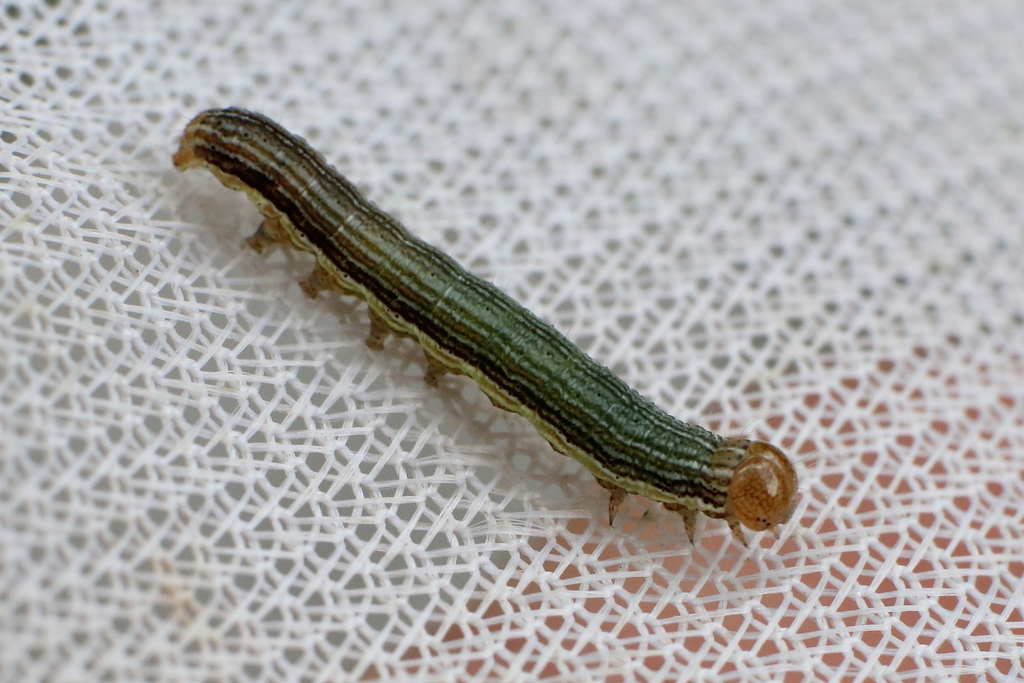
But what in the world is an armyworm? It is not a worm at all but rather the caterpillar of the true armyworm moth (Pseudaletia unipuncta). These medium-sized moths have a 1.5-inch wingspan (about the width of a golf ball) and are about ¾ of an inch in length. They are distinctive because they have one white spot on each tan forewing (hence, the scientific name unipuncta, or “one-spot”). It is hard to believe that this ordinary-looking, rather nondescript moth once laid siege to the city of Cambridge.
Adult armyworm moths are migratory. In the spring, these moths migrate north from the southern United States when it gets too hot. Strong winds or unusual storms can sweep large numbers of these moths to New England, where the female lays up to 2,000 eggs on host plants such as barley, corn, millet, oats, rice, rye, wheat and wild grasses. In the fall, these moths migrate south. They cannot overwinter in New England, for it is too cold. But when the weather begins to warm in the spring, these moths again head in our direction.
The true armyworm can be an agricultural pest. When the caterpillars hatch, they eat and eat. About 80 percent of an armyworm caterpillar’s feeding occurs during its last stage of development. At this stage, they march through fields at night like an invading army, a behavior that gives them their name. Because these caterpillars feed mostly at night and hide during the day, farmers often did not notice an infestation until great damage had occurred. The University of Massachusetts describes outbreaks with up to 100 caterpillars per square foot, which is enough to strip fields of greenery. Major outbreaks of armyworm caterpillars occur every five to twenty years. Massachusetts experienced the last major armyworm outbreak in 2020.
Read more Intensity in survival and horror
In the 1800s and early 1900s, authorities recommended spraying fields with “Paris green” to destroy these caterpillars. Paris — or Schweinfurt — green was a vivid, toxic green pigment made with copper and arsenic that scientists in Schweinfurt, Germany, developed in 1814. A 1919 paper, for instance, recommended that farmers “spray the infested area heavily with Paris green (one pound to 50 gallons of water) or with lead arsenate (two pounds to 50 gallons). Such sprayed material should, of course, not be used as feed.”
Because Paris green was so bright, companies used it in paint, wallpaper, fabrics, toys, artificial flowers and other goods. However, companies eventually retired this pigment from household products because it could poison people who manufactured it or lived around it. But its toxicity was still useful for killing insect pests. It became an important agricultural insecticide, and the military even used it to kill mosquito larvae during World War II. In July 1943 alone, the U.S. Public Health Service reported 18,364 pounds applied on the ground and 30,399 pounds applied by air to control mosquitos near hospitals and prisoner of war camps in 14 states.
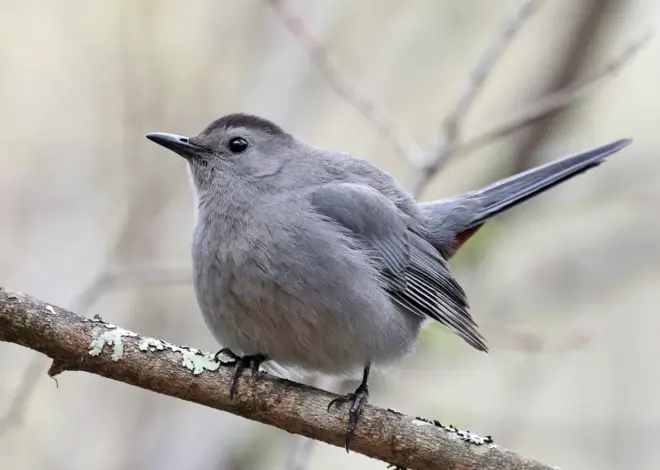
It wasn’t just humans who risked the side effects of Paris green. When armyworms marched, birds, including the kingbird, eastern phoebe, bobolink, brown-headed cowbird, red-winged blackbird, Baltimore oriole, grackle, chipping sparrow, catbird and American robin, all of which devoured the caterpillars or fed them to their young. In fact, people the bobolink the “armyworm bird.”
The Cambridge Tribune of August 1914, a notorious year for armyworms, has a plea from a reader: “In trying to get rid of the Army Worm, what about the animals and birds? Is there no other way than by all this poisonous Paris green, which will surely poison them too?
Thankfully, farmers today monitor fields better to control outbreaks before these caterpillars become big enough to become devastating. They use light and pheromone traps to catch adult moths. When they find the adults, they scour the fields and catch the tiny caterpillars that don’t yet do much damage.

Related Posts
How to survive a nor’easter if you are not human
The spotted lanternfly, an invasive pest