Social justice heats up second debate between Decker and MacKay
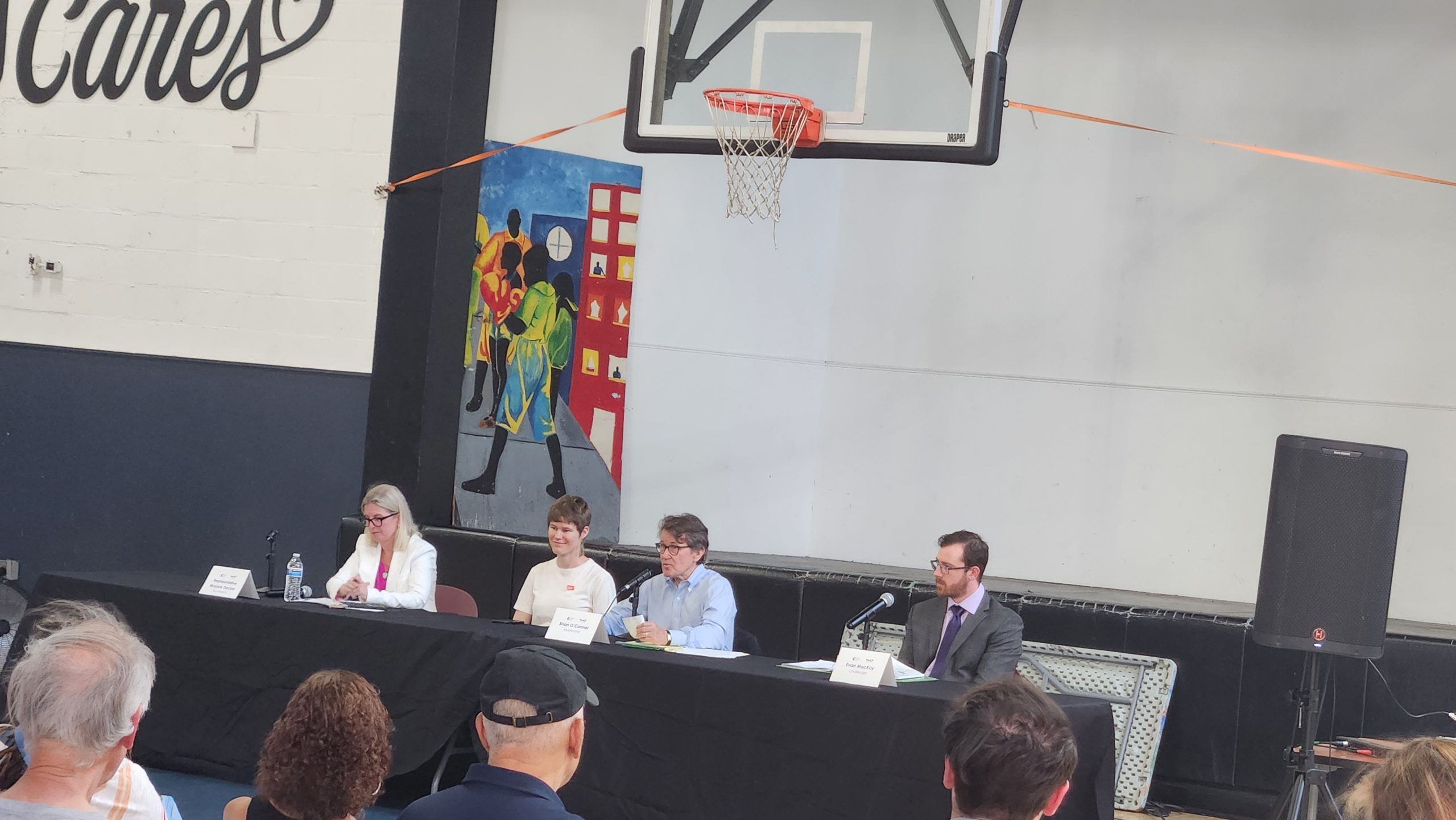
Social justice was the key issue in a debate between state Rep. Marjorie Decker and challenger Evan MacKay at the Cambridge Community Center on Thursday. The event was preceded by a moment of silence for Xavier Bautista, who was shot and killed near Sennott Park on the Fourth of July.
Read more Lawsuit against Copper Mill developer raises concerns in Davis Square
Decker’s seat, the 25th Middlesex District, is the only state legislative seat entirely in Cambridge. The campaign is a rematch of a tight race in 2024. The debate marked the second public discussion between the two candidates, after a feisty forum in June focused on transparency and accountability. A third event, organized by Cambridge Day, will happen Tuesday at 7 p.m. at Street Theory Collective in Central Square.
Thursday’s debate took place as hot weather returned, in front of roughly 150 people who were initially raucous but settled down after being admonished to follow ground rules prohibiting cheering and interrupting the candidates.
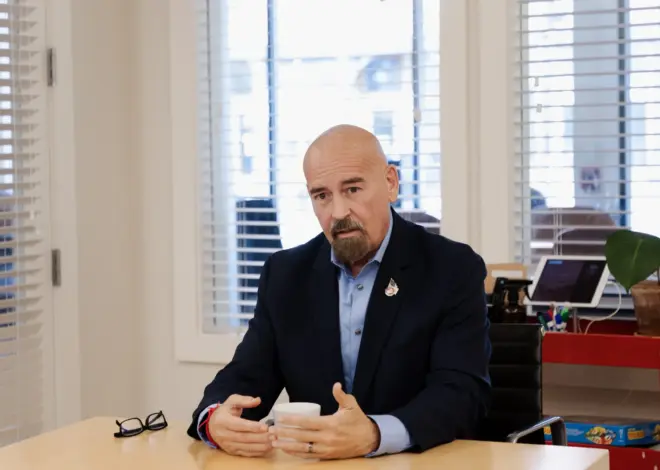
MacKay went first by virtue of a coin toss. In their opening statement they called out the administration led by Governor Maura Healey for upholding a “rigged system for the ultra-wealthy.” They also cited their efforts as former Harvard Graduate Students Union president to raise workers’ minimum wage.
In her opening statement, Decker led with a more personal tone, saying a few words in support of those grieving Bautista before sharing her personal connection to the Community Center. “This center is home for me. I’ve been coming here since I was a kid,” Decker said. She then referenced her contributions as state representative, including securing a million dollars for the very community center hosting the debate.
The event’s moderator, political journalist Brian Wright O’Connor, asked a series of questions focused on racial, social, and economic justice issues. The tone and volume quickly shifted higher.
MacKay repeatedly accused Decker of being aligned with Democratic leadership in a state legislature that has been ranked one of the least productive and least transparent. MacKay, who has signed the People’s Pledge refusing all lobbyist contributions above $200, challenged Decker to do likewise and accused her of taking campaign money from lobbyists. They also cited a filed in Cambridge called the Progressive Cambridge Independent Expenditure Political Action Committee.
In response, Decker called on MacKay to “start being more honest about where they come from” and to “stop lying to voters” about her voting record and political stances. She then returned to her roots growing up in public housing. “Families like mine were hardly ever at the table,” Decker said, adding that this is why she entered public service in the first place.
Stopping gun violence
Asked how to “rein in” gun violence after recent shootings in Cambridge, Decker cited her track record of gun regulation legislation to make communities safer. MacKay pointed out the disproportionate distribution of gun violence in society, stressing, “We need to be pursuing evidence-based policy, and we need to insist any level of violence is unacceptable.”
The two candidates were also asked about ShotSpotter, a sound-based system for detecting gunshots, which Cambridge stopped using recently after a controversial vote by Cambridge city council. Bautista’s shooting has sparked renewed debate about that decision. MacKay described ShotSpotter as “reactive,” saying it does nothing to prevent potential shootings and suggested funding initiatives so “violence is stopped before the guns are shot.” Decker did not take a stance but advocated for soliciting community input about such technologies, noting this is emblematic of how she governs.
Read more Bautista’s family mourns “senseless” loss of devoted father, family protector
Affordability on the table
While Decker leaned on her track record of increasing family and earned income tax credits to address questions of affordability, MacKay brought up an initiative that has appeared many times in Massachusetts politics: taxing the ultra-wealthy. This came up in the context of investing in education and addressing inequalities in healthcare outcomes and access. “The most prominent politicians work for the ultra-rich,” MacKay said, including that to “fight against this broken status quo,” legislators should tax the wealthy within the state. “We are still paying for these regressive cuts, and the ultra-wealthy are getting more and more money,” MacKay said. They added that Decker voted in favor of Healey’s tax cuts on short-term capital gains and estate taxes, even as the same bill raised family tax credits and the cap on rental deductions.
That drew an immediate challenge from Decker, who said “My opponent has spread a lot of misinformation about my record.” Decker cited other initiatives she has passed in support of affordability, then said “I have spent my whole career to try and redistribute wealth from the wealthy to those who don’t have it.” Recently, Decker advanced a bill addressing poverty amongst Massachusetts family called the ASAP ACT.
“Campaigning and being honest is just as important for transparency,” Decker said.
MacKay had called Decker complicit in a House provision that would have banned transgender athletes, which initially was passed in April 2025 without a recorded vote. MacKay said “We need to see on the record which politicians supported these policies, and which politicians do not support these policies,”
Decker again chided her opponent and defended her record on LGBTQ+ rights and gender-affirming care. “Nobody in this room believes that I do not support our LGBTQ+ youth,” she said, asking MacKay to stop “distorting” her record.
“As state representative, I have modeled what transparency in state government means,” Decker rebutted. “You know who I am. I’m exactly who I have always been,” she added.
Some common ground
The two candidates seemed to agree during the debate on the problem of corruption on Beacon Hill, including the need for auditor Diana DiZoglio. In June, the House voted to give DiZoglio limited access to legislative records, despite nearly three-fourths of voters approving audits of the legislature in 2024. Decker, however, maintained that DiZoglio “got everything she wanted” through a recent lawsuit and that Decker would continue to support the audit. MacKay was stalwart in their support of public voting records for legislators on Beacon Hill and mentioned that DiZoglio had endorsed them.
Other issues that arose were around high school graduation requirements, housing affordability and earmark spending in the state legislature. MacKay continued to push taxation of the wealthy as a solution in addition to rent control, real estate transfer fees and reducing conflicts of interest with real estate lobbyists in Massachusetts politics. Meanwhile, Decker pointed to K-3 legislation, the MBTA Communities Act, funds for a Cambridge birth center and a pending bill providing behavioral health access for children as some examples of her track record of getting things done for constituents. Another question addressed rising antisemitism and Islamophobia in Cambridge. Both candidates vowed support for human rights and inclusivity.
Sponsored by the Cambridge chapter of the National Association for the Advancement of Colored People (NAACP), Thursday’s debate was tempered by punctual time-keeping and strict ground rules restricting audience response and interruptions, unlike in the candidates’ first debate on transparency. Neither candidate has been endorsed by NAACP Cambridge or Cambridge Community Center.
Read more Connolly, Miller mostly agree to agree about Beacon Hill
A recording of the debate by CCTV will be made available after the debate.
The primary will take place Sept. 1.